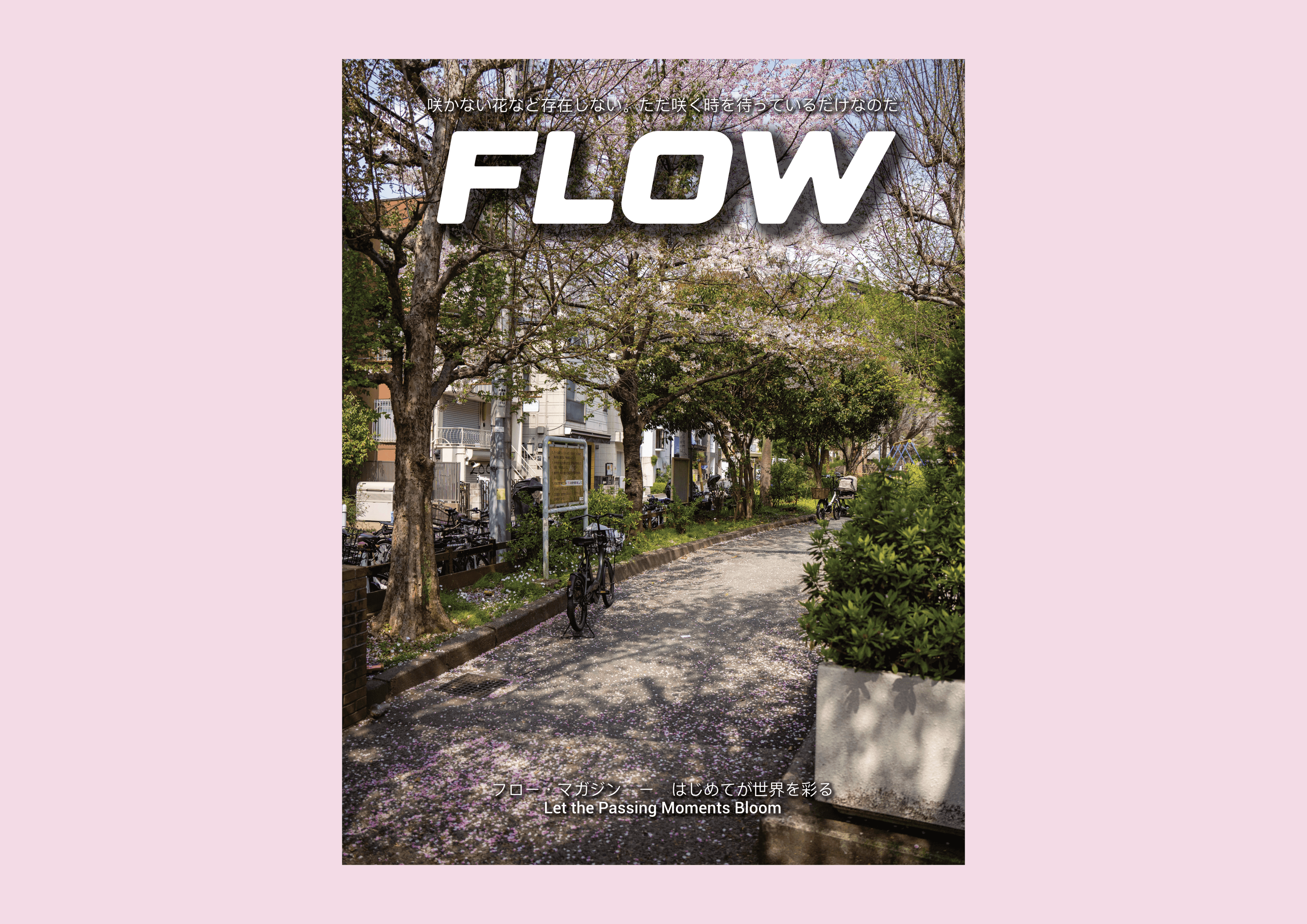
Flow
December 1, 2025
is a Japan photobook exploring the invisible rules that shape how we move through shared space, contrasting America's instinct to take up space with Japan's quiet choreography of consideration. Set against Tokyo's current and drifting cherry blossoms, it captures the moment my own assumptions began to soften.
Flow: A Visual Journey Through Japan
This photobook began as an observation of movement—how people navigate shared spaces in Tokyo versus American cities. What started as curiosity about social choreography became a meditation on consideration, space, and the invisible rules we follow.
Foreward
The sun was just starting to climb over the tops of Shibuya’s skyscrapers, washing away the last bits of neon that had colored the skyline all night. I stood outside a convenience store, hands wrapped around a cheap coffee, feeling the cold bite through the paper cup. I lingered for a moment, letting the city’s early quiet settle in, before tossing the cup and heading out. Without even thinking, I found myself walking faster, scanning for the nearest metro entrance, like I was supposed to keep up with the city before it really woke up. Moving quickly felt like the only way to belong here.
I noticed my pace had changed, almost like my body was following rules I hadn’t agreed to. I was moving with purpose, careful not to bump into anyone, always aware of how much space I was taking up. It was so different from the way I grew up, where you could take your time, stretch out, and trust that the world would slow down with you. That difference stuck with me, especially when I thought about where I came from.
Reflecting on my upbringing, I realized that growing up in the Bay Area and going to school in Los Angeles, I inherited a culture that is relaxed and loud. There, we optimize for personal expression, for standing out, for building an image that announces who we are before we speak. In America, we celebrate the individual. We are taught to take up space.
But here, it’s the opposite. In Japan, you’re supposed to blend in, not draw attention to yourself. Everything is about being considerate, about making sure you’re not in anyone’s way. The flow shifts from yourself to everyone else, to the quiet experience of sharing space with strangers on the street or in a packed train car.
In Shibuya, when the light turns green, everyone moves at once, but it's not chaotic. It's almost gentle, like everyone just knows how to move together without saying a word. Petals swirl between us, carried on the current of a thousand footsteps. I realized the blossoms were moving just as we were: together for a moment, then drifting apart, never colliding. This quiet, mutual understanding keeps everything flowing, felt in the effortless way people cross paths. That feeling is the city’s current.
Standing right in the middle of that crossing, I felt something shift inside me. It hit me that culture isn’t just the background noise of a place—it’s the invisible structure that shapes how we move, how we wait, how we celebrate, even how we’re alone together. It’s what tells us how to exist next to each other without ever saying a word.
I came to Japan carrying my own architecture, built from years of American assumptions I didn't even know I had. Flow is what happened when those structures met, overlapped, and slowly began to soften.